
Breaking into the Western Market: a vital step for biotech start-ups in China
I am officially back in the U.S.—missing Shanghai and dealing with my nocturnal sleeping patters (China is 12 hours ahead of New Hampshire). I already miss the hustle and bustle of the crowded city, although I can’t deny that the weather and atmosphere in the White Mountains is absolutely idyllic. Seeing a clear blue sky for the first time in five weeks was a definite highlight as I got off my twelve and a half hour flight from Shanghai. Side note: I was lucky enough to be bumped up to business class flying home!
Despite being back, I still have a few more interviews to post from my time in China: two small business owners and an intellectual property lawyer from a major international law firm. As a follow-up to my Suzhou Gardens post, I have some great notes from my conversation/interview with Peter Zhang, who arranged the gardens trip for Maria and me.
Dr. Zhang is the CEO and co-founder of GenePharma Co., which “aims to become a global main supplier and service provider of RNAi products, utilizing existing advantages of the technology, experience, low-cost and the dedication of their staff.” I was able to tour both the Pudong and Suzhou facilities and get an inside look into the company. Below is our interview, conducted over a delicious and authentic family style Chinese lunch.
Q: Tell me a little bit about your background and the path that led you to your current position.
A: I went to college in China and then completed my M.S. and PhD in chemistry here as well. I worked in Beijing for two years and then obtained a Royal Society Scholarship. I spent 5 years at King’s College in the UK and conducted my post-doc work with a famous nuclear chemist. I then started working at CruaChem, based in Scotland, as a bench scientist. I began working in R&D with specialty chemicals and in 1998 I began to get involved in sales and technical support. I eventually was in charge of all sales in China and increased our Chinese sales revenue from 700 to one million pounds.
Q: Wow, that’s quite an increase. Why did you decide to leave the company when you were so successful?
A: In 2001 the company developed a new product, which I did not think would do well. I talked to my customers and found that there really was no market for the product. I even called the CEO of the company and explained this. However, the company decided to go through with the production and, as I predicted, it made no money for us. At this point, I was a senior member of the company’s R&D sector and didn’t think this type of thing should be happening. I decided the company was not the place for me and that it was time to leave.
Q: Why did you decide to go back to China after living in the UK for so long?
A: I was very homesick and missed my family and the country. I also saw that there were numerous opportunities for biotech companies in China, especially in RNAi technology. I had worked with RNAi technology extensively during school and realized there was a great need for my expertise, so I co-founded GenePharma in 2003. We were very naive at first because we assumed if we had a novel RNAi technology and a lot of experience we would easily get money from venture capital firms. In fact, it was not easy at all. We ended up having to use our own money in order to manufacture and sell our products and in turn, generate revenue. As the market increased and customers started buying our products, we became a pioneer of RNAi technology in china.
Q: I’ve done my own research on your company, but I know things in China can change quickly, so will give me an update of what your company has been specifically focused on in the past couple of years?
A: The company has all the internationally leading core technologies of siRNA chemical synthesis, which include the RNA monomer synthesis technology, the custom and chemically-modified siRNA oligo synthesis technology, the nucleic acid fluorescent labeling technology, and many nucleotide chemical modification technologies.
In 2007, we became the largest low-cost supplier of RNAi technology products in China. At this point we decided to scale up production and start selling to the overseas market. To do this we needed funding from the government. We already had a facility in Shanghai, but the local government was only interested in funding big companies. We were still relatively small at the time, so we looked at other areas of China to open a second facility. The Suzhou government was extremely helpful in our initial funding since our company fell under the category of “emerging industries.” They contributed three million dollars to our company and built our new facility for us. We didn’t have to pay to build the facility ourselves, we only had to pay rent. The Suzhou government learned a lot from the government in Singapore and knows how to treat and serve a new company. It was a really great place to go because after the new facility was built, our market share in China became bigger and bigger.
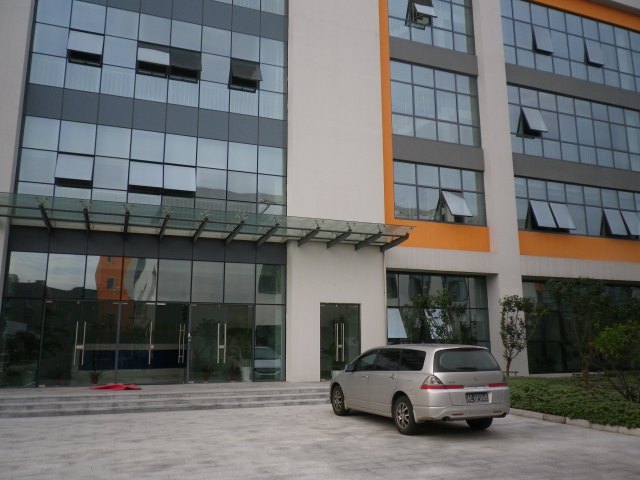
GenePharma's Suzhou Facility - Built by the Suzhou Government
Q: Would you say most of your sales are to domestic or foreign customers?
A: Right now our sales by volume are mostly domestic, although there is great potential for us in the overseas market.
Q: As a small businessperson, what have been some of your biggest challenges?
A: I’d say our biggest challenge right now is moving into the overseas market. We have the people, money, facilities, and high quality right now in China. But we need to determine the best strategy in transitioning our business abroad, and this can be a major difficulty.
Q: Since one of the challenges of getting business in the rest of the world, how do you get enough employees for your company that speak English and have the same level of customer service as in the west?
A: Hiring high quality employees in sales and customer service is very important, but also very expensive; hence, our sales staff is still relatively small. We can’t afford to train people, pay extremely high salaries, and then have them leave for another company soon after. Turn over is very prevalent in this business and in China specifically. However, we can save money and keep costs down in hiring production staff that don’t speak English, since it isn’t necessary for those positions.
Q: What about shipping your products outside of China? Import/export regulations? Distribution challenges?
A: We really don’t have any issues with distribution.
Q: How do you convince people in the western market of your quality?
A: To prove our quality, we give samples of our products for customer evaluation and comparison. For example, a company out of D.C. recently purchased our products to evaluate the quality, price, and production time. They conducted a six-month trial in which we gave them one batch of specialty products per week. After comparing a few companies, we ranked number one so they decided to continue business with us.
Additionally, when scientists and institutions using our products write publications for reputable and widely viewed journals such as Science and Nature, they must site our company. This not only a great way to gain new customers, but also provides evidence that our products are high-quality and reliable.
Q: How do you compete with other companies in China?
A: We have a very comprehensive product line and a full service approach in serving our customers. This really makes our company unique and allows us to get ahead of the competition.
Q: In terms of expanding your business, what do you see yourself doing next?
A: As I mentioned before, one of our biggest goals is increasing our business with the western market. This will probably entail some partnership with a larger company, such as a distribution company.
Q: Do you have a specific department devoted to expansion in the western market?
A: We have a few experts that make up our business development team. This team will grow as our overseas business grows.
Q: What have you enjoyed most about co-founding your own company?
A: I really, really love it. It is very tough obviously, and there is always a lot of pressure. In the beginning it was challenging, but my family supported me and now things are running smoothly.
Q: As a college student starting out, can you offer any advice for me in terms of business and the direction that I head? Would you recommend coming to work in China?
A: Just make sure you stick to what you are interested in. I would say it helps to work for a big company first—it’s really great to gain some experience and see how the company is run. But I’ll warn you, if you stay too long with one company, it becomes less likely you will start your own business one day. It is a really different experience. As for working in China, I would say you should work in the U.S. first but always keep an eye on what is happening in China. After you’ve gained experience in the U.S., coming to China would be a great opportunity.
 Susie in Shanghai
Hey Susie! I finally had the time to read through this entire thingamajig 🙂 I understand about half of it, the personals. Still, I loved looking at all the beautiful pictures of Shanghai and of you, and I loved reading all about your stories of work and play. I miss you already and wish you were still with us in Shangai, though I think it’s better this way because the room is already crowded with just two of us. Anyway, hope you’re having fun back in New Hampshire and are keeping dad company. Have you seen the house yet? Email me soon! Love you, Sabrina
Thanks for another fantastic post. The place else may anybody get that type of info in such a perfect way of writing? I’ve a presentation subsequent week, and I am at the search for such info